

close
Choose Your Site
Global
Social Media


Views: 0 Author: Site Editor Publish Time: 2026-06-30 Origin: Site


Procurement professionals face a constant, underlying tension. You must balance low per-unit packaging expenses against long-term brand visibility and strict environmental mandates. Striking this delicate balance often dictates the overall success of a modern promotional campaign. The packaging landscape is shifting rapidly away from single-use plastics. We now see a massive pivot toward reusable alternatives across retail shops, trade show floors, and supermarket chains. Everyday shoppers expect durable, environmentally responsible carriers.
This article objectively evaluates the commercial, material, and operational reasons behind the sheer dominance of the Non Woven Bag in promotional packaging. We will unpack the exact performance metrics driving its widespread adoption. Ultimately, this guide will help you make sound, evidence-based sourcing decisions for future marketing initiatives.
Unit Economics: Non woven bags offer one of the lowest cost-per-impression (CPI) ratios in promotional packaging due to low manufacturing costs and high end-user reuse rates.
Material Efficiency: Spunbond polypropylene (PP) provides a high strength-to-weight ratio, allowing for structural durability without the bulk of traditional woven fabrics.
Print Adaptability: A printed non woven bag supports multiple high-fidelity branding techniques (screen print, heat transfer), though buyers must account for the material's heat sensitivity.
Sourcing Risk: Quality varies significantly based on GSM (Grams per Square Meter) and seam construction (ultrasonic vs. stitched), requiring strict vendor evaluation.
Marketing teams measure packaging success through long-term impressions. A single promotional tote often stays in a consumer's hands for over seven months. This extended lifecycle transforms a basic giveaway into a highly visible, walking billboard. It continuously generates local brand exposure within the community. We see brands leveraging this extended visibility daily. They achieve impressive market reach without incurring recurring advertising expenses. The initial low expenditure quickly translates into compounding promotional value.
Regulatory compliance heavily influences modern packaging strategies. Many cities and municipalities now enforce strict single-use plastic bans. Retailers must adapt quickly to remain operational. They need fully compliant alternatives. Canvas and jute are highly sustainable materials. However, they carry premium production overhead. Polypropylene offers a highly practical middle ground. It immediately signals environmental responsibility to everyday consumers. It fulfills legal mandates effectively without straining procurement budgets.
High-volume environments require specific operational efficiencies. Supermarkets and large retail chains distribute thousands of carriers daily. They prefer this specific material for several logistical reasons. The carriers stack effortlessly in crowded storage rooms. They offer exceptional lightweight freight attributes. This drastically minimizes shipping and distribution overhead. Procurement teams also appreciate the highly predictable manufacturing timelines associated with these materials.
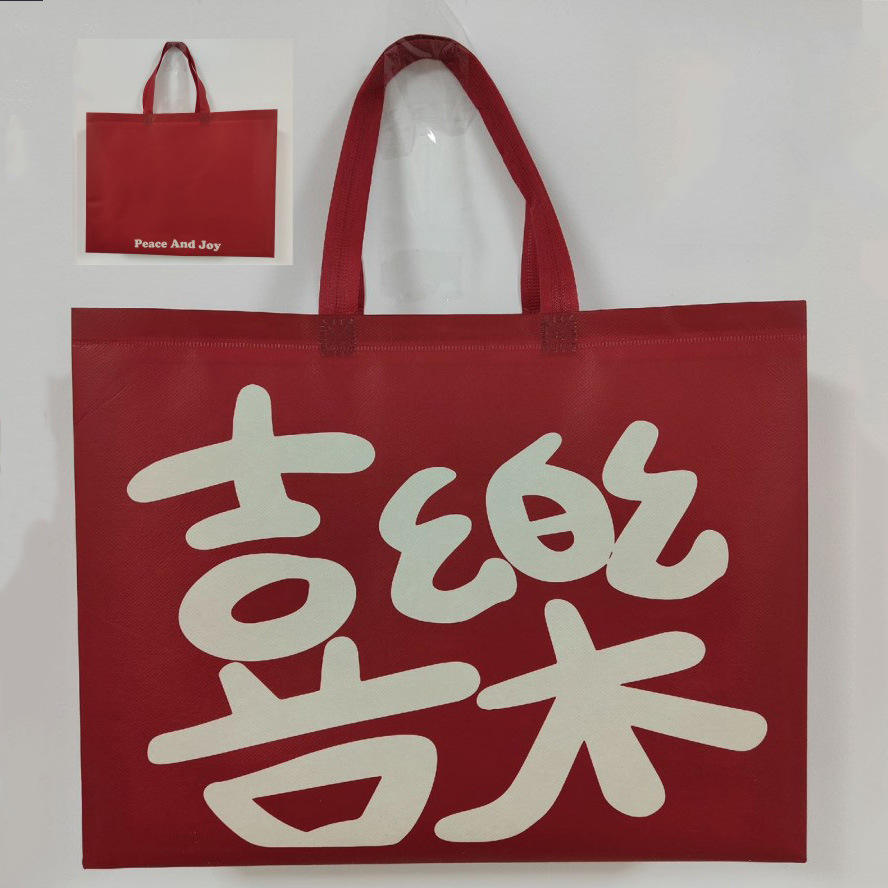
Understanding the final product requires a look at its fundamental manufacturing process. Factories do not weave these fabrics on traditional mechanical looms. Instead, they utilize a specialized spunbond process. Extrusion machines melt raw polypropylene pellets into a liquid state. They extrude the plastic into fine, continuous fibers. Rollers then apply intense heat and high pressure to bond these fibers together. This creates a distinct, web-like texture. It yields a uniform, highly breathable fabric sheet ready for cutting.
Grams per Square Meter (GSM) dictates overall fabric thickness. It directly influences structural durability and intended application.
Under 70 GSM: These represent highly budget-friendly options. They suit lightweight trade show literature perfectly. Do not use them for heavy groceries or sharp objects.
80–100 GSM: This range serves as the undisputed industry standard. Supermarkets and retail stores rely heavily on this specification. It perfectly balances raw material expenses against reliable tear resistance.
100+ GSM: This upper tier provides a noticeable premium feel. It offers superior heavy-load capacity. Brands consistently choose this thickness for high-end promotional gifting and VIP events.
End-users heavily prioritize practical, everyday benefits. Spunbond polypropylene naturally repels light moisture. It effectively protects interior contents from unexpected light rain or spills. Consumers can easily wipe the exterior surface clean. A damp cloth quickly removes minor stains or dirt. This inherent low-maintenance nature directly encourages habitual, daily reuse. When consumers reuse the item frequently, your brand exposure naturally multiplies.
Buyers often confuse these two distinct material variations. Woven polypropylene features a visible, grid-like interlacing. Manufacturers weave thick plastic tapes together horizontally and vertically on large looms. This structural grid creates immense tensile strength. Conversely, spunbond polypropylene relies entirely on the heat-bonded fiber web. It completely lacks the visible woven grid pattern. The physical texture feels significantly different in hand.
We recommend woven carriers for very specific, heavy-duty scenarios. They handle heavy agricultural products effortlessly. They easily transport bulk building materials or hardware supplies. Supermarkets occasionally use them for extreme-weight loads. Think of large canned goods, heavy glass bottles, or bulk pet food. The dense woven grid prevents catastrophic tearing under extreme, concentrated stress.
Promotional campaigns naturally have different functional priorities. Spunbond fabric provides a significantly smoother surface. This allows for intricate, highly legible logo printing. It offers a softer, more pliable texture overall. Retail apparel brands prefer this softer feel against clothing. Most importantly, it requires lower production expenditures for massive, high-volume promotional giveaways.
Comparison Matrix Chart: Woven vs. Spunbond Polypropylene | ||
Feature | Woven Polypropylene | Spunbond Polypropylene |
|---|---|---|
Manufacturing | Interlaced plastic tapes on a loom | Heat-bonded continuous fibers |
Tensile Strength | Extremely high (heavy-duty) | Moderate to high (everyday use) |
Surface Texture | Textured, grid-like | Smooth, web-like |
Print Quality | Basic; best with heavy lamination | Excellent; supports fine details |
Ideal Use Case | Agriculture, bulk hardware, extreme weight | Retail, trade shows, standard groceries |
Decorating a printed non woven bag requires understanding various vendor production methods. You must match your artwork requirements to the correct printing technology.
Screen Printing: This method works best for solid, one-to-two color logos. It remains highly cost-effective at massive production scale. The ink sits cleanly on the smooth fabric surface, providing sharp lines.
Heat Transfer and Lamination: Modern branding often requires full-color photographic prints. Vendors must use heat transfer or full lamination for complex, multi-color artwork.
Implementation warning: Unlaminated spunbond fabric is highly heat-sensitive. The material can literally melt during production. Vendors must carefully calibrate standard high-heat transfer equipment. Improper temperature control during heat transfer ruins the entire batch. Always verify your vendor's experience regarding heat application.
Lamination adds a protective outer film over the base fabric. You generally choose between matte and glossy finishes. Glossy lamination makes colors pop vibrantly. It creates a highly water-repellent exterior surface. Matte lamination offers a sophisticated, muted aesthetic. It elevates the perceived brand value significantly, making the item feel more premium.
Always optimize your digital artwork for the physical carrier. Advise your internal design team to keep critical elements centered. Keep important text far away from the seams. Avoid placing detailed logos near the bottom or side gusset folds. Physical folding during the final manufacturing stage easily distorts edge-to-edge artwork. Leave adequate bleed space around your central graphics.
You must rigorously evaluate physical vendor samples before approving mass production. Do not rely solely on digital mockups. Start by inspecting the seam construction.
Ultrasonic (Heat-sealed): Machines use ultrasonic waves to fuse the edges together. This method enables faster production. It creates a sleek, modern, seamless look. It works perfectly for lighter loads like trade show handouts or lightweight apparel.
Sewn (Stitched): Factory workers physically sew the edges using durable thread. This method offers much higher structural durability. It confidently supports heavier grocery loads. Always look for piped edges. External piping adds necessary structural integrity and visual appeal.
Check the handle base meticulously. This junction is the primary failure point for any promotional carrier. Instruct your quality control team to look for "X-stitch" reinforcement. A strong cross-stitch pattern distributes carrying weight evenly across the fabric. It prevents the handles from ripping away under sudden physical stress. Avoid handles featuring only a single line of straight stitching.
Gussets determine the final interior volume. Clarify the structural differences early in the sourcing process. A bottom-gusset only design expands at the base but remains flat at the sides. This represents a more economical construction method. A full side-and-bottom gusset creates a true, three-dimensional box style. The carrier stands upright on its own. This independent structural stability offers a much higher perceived value to the end-user.
Sample Evaluation Checklist | ||
Component | What to Look For | Red Flags |
|---|---|---|
Seams | Tight ultrasonic seals or even, reinforced thread stitching. | Loose threads, gaps in the heat seal, puckered fabric. |
Handles | X-stitch (cross-stitch) at the attachment point. | Single straight stitch, handles too short for shoulder wear. |
Fabric Weight | Opaque appearance, matches requested GSM thickness. | Highly translucent spots, inconsistent thickness. |
Print Quality | Sharp edges, solid color fill, centered placement. | Smudged ink, melted fabric near the logo, faded colors. |
The rising popularity of these carriers is clearly not a passing industry trend. It represents a highly calculated balance of functional attributes. You secure low initial unit expenses. You achieve extended, high-impact brand visibility. You deliver reliable, functional durability directly to the consumer. This combination makes spunbond polypropylene an exceptionally powerful promotional tool.
Start your upcoming procurement process by taking definitive action. First, audit your current packaging expenditures across all active marketing channels. Next, define your exact target GSM based on your typical product payload. Request physical samples from multiple potential vendors. Test the handle stitching rigorously before final approval. Finally, verify print fidelity and heat tolerance before committing to large bulk minimum order quantities.
A: They are made from plastic (polypropylene). Therefore, they are not biodegradable. Their actual environmental value relies entirely on their reusability. Consumers must use them multiple times. This repeated usage offsets the carbon footprint of their initial production. They only outperform single-use plastics when kept in regular, active circulation.
A: MOQs vary significantly by supplier and customization method. Simple screen prints often start as low as 500 units from local vendors. However, complex designs require different scale. Fully laminated, custom-dyed carriers sourced directly from overseas manufacturers typically demand much higher volume. These factory-direct runs usually require MOQs between 5,000 and 10,000 units.
A: Yes, you can clean them carefully. Users should gently hand-wash them in cold water. You can also wipe them down using a damp cloth and mild soap. We strongly advise against machine washing. Aggressive machine agitation destroys the delicate spunbond fibers. Hot water easily degrades the printed artwork.
A: A properly constructed 80 GSM carrier handles everyday tasks easily. If it features secure cross-stitched handles, it can comfortably hold between 10 to 15 lbs (4.5 to 6.8 kg). For heavier requirements, buyers need stronger material. You should specify 100+ GSM construction. Alternatively, opt for heavy-duty woven polypropylene for extreme loads.


