

close
Choose Your Site
Global
Social Media


Views: 0 Author: Site Editor Publish Time: 2025-11-05 Origin: Site


Non-woven bags have quickly become an eco-friendly alternative to plastic bags in various industries worldwide. These bags are durable, versatile, and an environmentally responsible choice for both businesses and consumers. But what exactly are non-woven bags made of, and what makes them so special compared to other types of bags? In this article, we will explore the materials used in non-woven bags, their benefits, and why they are a preferred option in the modern world.
Non-woven bags are created using a unique manufacturing process that involves bonding fibers together without weaving or knitting. This is done through various methods such as heat, pressure, or adhesive bonding. Non-woven bags are commonly made from synthetic fibers like polypropylene (PP) or polyethylene (PE), which are processed to create a fabric-like texture. These fibers are then fused together to form the final product, which can be used in a variety of applications.
The popularity of non-woven bags is largely due to their versatility and cost-effectiveness. These bags are available in a variety of designs, colors, and sizes, making them ideal for use in industries such as retail, hospitality, and even healthcare. Their lightweight yet sturdy construction allows them to carry a range of products, from groceries to promotional materials, and they are often seen as a more sustainable alternative to single-use plastic bags.
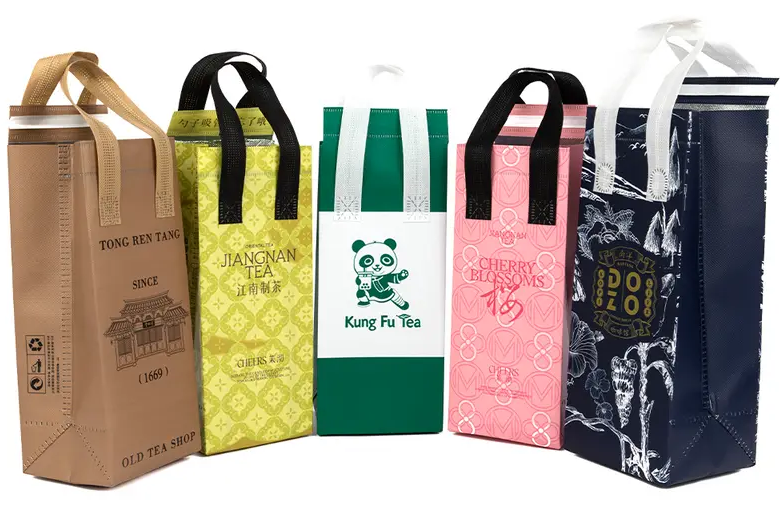
The primary material used in the creation of non-woven bags is polypropylene (PP). However, there are several other materials that can be used, depending on the intended use and desired properties of the final product. Here’s a deeper look at the materials commonly used in the manufacture of non-woven bags:
Polypropylene is the most common material used in the production of non-woven bags. This thermoplastic polymer is lightweight, durable, and resistant to chemicals, making it an excellent choice for bags that need to withstand regular use. Polypropylene bags are versatile and can be made into various forms, such as spunbond, meltblown, and needle-punched non-wovens.
The process of making non-woven bags from polypropylene involves melting the polymer and forming it into fibers, which are then bonded together using heat or pressure. The result is a strong yet flexible material that is ideal for use in a wide range of applications, from reusable shopping bags to promotional items.
Polyester is another synthetic fiber commonly used in non-woven bag production. While polypropylene is the most common material, polyester bags have advantages in specific applications, such as when a more robust or water-resistant bag is required. Polyester non-woven bags also offer excellent durability and resistance to wear and tear. However, polyester is often more expensive than polypropylene, which can affect the overall cost of the final product.
Cotton is a natural fiber that can be used in the production of non-woven bags, although it is not as common as synthetic fibers like polypropylene and polyester. Cotton-based non-woven bags are biodegradable and can be an attractive option for eco-conscious consumers. These bags offer a natural feel and appearance but tend to be more expensive than their synthetic counterparts. Additionally, cotton bags may not be as durable as polypropylene bags, especially in wet conditions.
Another environmentally friendly option for non-woven bags is the use of recycled materials. Polypropylene and polyester non-woven bags can be made from recycled plastic bottles, reducing the environmental impact of producing new raw materials. This makes them an even more sustainable choice for businesses and consumers who want to minimize their carbon footprint.
Recycled non-woven bags can have similar properties to those made from virgin polypropylene or polyester, including durability, strength, and resistance to wear. By using recycled materials, manufacturers can help reduce the amount of plastic waste in the environment and promote a more sustainable approach to bag production.
As the demand for sustainable products continues to rise, many manufacturers have started to experiment with biodegradable materials for non-woven bags. Materials such as polylactic acid (PLA) are derived from renewable resources like corn starch and sugarcane, offering a more eco-friendly option compared to traditional plastics. These biodegradable non-woven bags break down naturally over time, reducing their environmental impact and offering an alternative for consumers looking to make more sustainable choices.
The process of making non-woven bags is quite different from traditional fabric production. In the conventional method of making woven or knitted fabrics, yarns are interlaced together to create a stable material. However, non-woven bags are produced using a bonding process, where the fibers are either mechanically or chemically bonded together without the need for weaving.
The spunbond process involves extruding molten polypropylene (or other fibers) through a spinneret to form continuous filaments. These filaments are then laid down in a random pattern and bonded together using heat and pressure. The resulting non-woven fabric is durable, flexible, and lightweight, making it an ideal material for producing non-woven bags.
In the meltblown process, the polymer is extruded into fine fibers, which are then blown onto a collector screen using high-pressure air. These fine fibers create a dense, web-like structure that can be used in non-woven bags. Meltblown fabrics are often used for applications requiring high filtration, such as face masks, but can also be used in the production of bags.
The needle-punched process involves passing fibers through a series of needles that push the fibers through a backing material, creating a felt-like structure. The resulting fabric is thick and highly durable, making it suitable for applications requiring extra strength and abrasion resistance.
In some cases, non-woven fabrics are bonded together using chemicals or adhesives. This process involves applying a bonding agent to the fibers, which are then pressed together to form the final fabric. Chemical bonding can be used to create fabrics with specific properties, such as increased softness or water resistance.
Non-woven bags offer a wide range of benefits that make them an attractive choice for businesses and consumers alike. Some of the key advantages of non-woven bags include:
One of the primary reasons non-woven bags have gained popularity is their environmentally friendly nature. Unlike plastic bags, which take hundreds of years to decompose, non-woven bags are often recyclable and biodegradable. Even when made from synthetic materials like polypropylene, non-woven bags can be recycled into new products, reducing their overall environmental impact.
Non-woven bags are strong and durable, capable of holding a significant amount of weight without tearing or breaking. The unique manufacturing process results in a fabric that is resistant to wear and tear, making non-woven bags ideal for repeated use.
Non-woven bags can be easily customized with logos, designs, and other branding elements. This makes them a popular choice for promotional items, giveaways, and corporate branding. Customization is usually done through printing, embroidery, or heat transfer methods.
Compared to traditional woven bags or bags made from other materials, non-woven bags are generally more affordable. The manufacturing process is efficient, and the materials used are relatively inexpensive, making non-woven bags a cost-effective solution for businesses looking for an affordable, reusable bag option.
Non-woven bags are much lighter than other types of bags, such as those made from cotton or leather. This makes them easier to carry and transport, making them ideal for grocery shopping, carrying books, or as promotional giveaway items.
Woven bags are made from fibers that are interlaced together, while non-woven bags are created by bonding fibers without weaving. Non-woven bags are generally more affordable, lightweight, and versatile, making them a popular choice for reusable shopping bags.
Many non-woven bags are made from polypropylene, which is not biodegradable. However, some non-woven bags are made from biodegradable materials like PLA, and others can be recycled, reducing their environmental impact.
Yes, non-woven bags are designed to be durable and reusable. They can be used for shopping, carrying books, or even as storage bags for various household items.
Non-woven bags are designed to be strong and durable. They can hold a significant amount of weight and are resistant to wear and tear, making them ideal for carrying groceries, books, and other items.
Yes, non-woven bags can be easily customized with logos, designs, and other branding elements, making them a popular choice for promotional items and giveaways.
Non-woven bags are made from synthetic and natural fibers, offering a strong, durable, and eco-friendly alternative to plastic bags. With the increasing focus on sustainability, non-woven bags are becoming a preferred option for businesses and consumers alike. Whether used for shopping, promotional items, or everyday storage, non-woven bags provide a versatile, cost-effective, and environmentally responsible solution to meet the needs of today’s consumers.


