

close
Choose Your Site
Global
Social Media


Views: 0 Author: Site Editor Publish Time: 2026-05-27 Origin: Site


Sourcing the right packaging often feels like a guessing game. Buyers need hard data to prevent frustrating bag failures. You want to avoid unexpected spills or torn handles without overspending on unnecessarily thick materials. Achieving this balance requires precise knowledge of packaging specifications.
The term "standard paper bag" remains notoriously ambiguous across the industry. Misunderstanding naming conventions routinely leads to procurement errors. Many businesses confuse "Basis Weight" for "Safe Carry Load." This misunderstanding ultimately causes double-bagging waste. It also severely compromises brand perception when a customer's order breaks during transit.
This guide breaks down actual weight limits and decodes complex technical specifications. You will discover a clear framework for selecting the correct packaging for retail or food service. We will explore everything from historical sizing metrics to modern durability factors. You will walk away knowing exactly how to evaluate physical sample tests.
Terminology mismatch: A bag marketed as "52 lb" usually refers to its basis weight (paper thickness), not its carrying capacity.
The "Standard" Benchmark: The industry-standard 1/6 BBL grocery bag safely carries 20 to 25 lbs of physical weight under normal conditions.
Takeout Sizing: "Pound" ratings in takeout bags (e.g., 6LB, 16LB bags) are historical sizing references, not exact literal weight limits.
Material Matters: Virgin kraft paper holds heavier loads than recycled kraft due to the retention of long cellulose fibers.
Industry sizing conventions often baffle new procurement managers. They see seemingly random numbers and letters. To choose the right container, we must first translate these old-school terms into modern dimensions.
When someone mentions a standard grocery bag, they usually mean the 1/6 BBL size. "BBL" stands for barrel. This specific size originated when merchants measured dry goods by the barrel. A 1/6 BBL container holds precisely one-sixth of a standard barrel's volume.
Typical dimensions for this size are 12" x 7" x 17". You see this model everywhere. Supermarkets and large food-service operations rely heavily on it. It provides ample volume for bulky items like cereal boxes and milk jugs.
Flat-bottom takeout bags usually follow a different sizing rule. Manufacturers call this design the Self-Opening Sack (S.O.S). The flat bottom allows it to stand upright automatically. This design drastically speeds up the packing process for retail clerks.
You will frequently see sizes listed as "4-pound," "6-pound," or "16-pound." These names refer to historical volume measurements. More than a century ago, they indicated how many pounds of sugar a specific Paper Bag could hold. They do not represent modern safe carrying limits.
For example, a typical 6LB size measures roughly 6” x 4” x 12”. It is ideal for quick-service snacks or single meals. If you try to place six pounds of heavy metal hardware into a 6LB takeout container, it will likely fail.
Never assume a "16-pound" bag safely carries 16 pounds of mixed retail goods. This assumption routinely leads to catastrophic bottom blowouts during customer hand-offs. Always treat "pound" ratings strictly as volumetric size categories.
The most dangerous trap in packaging procurement involves confusing basis weight for dynamic carrying capacity. Understanding this difference will save you from buying inadequate supplies.
Basis weight is the standard metric for paper thickness. Manufacturers define it as the weight of one ream of paper cut to a standard size. A ream consists of 500 sheets. You will usually see this metric represented by a pound sign ("#") or "lbs." For example, you might buy a 40# or 52# product.
B2B vendor listings frequently cause profound confusion. A supplier might advertise a "52 lb bag." Novice buyers see this and assume it holds 52 pounds of groceries. In reality, this implies a 52# basis weight. It speaks to the paper's density, not the safe dynamic load.
Contrast this measurement with actual carrying capacity. A 52# basis weight 1/6 BBL model has a safe dynamic load limit of roughly 20 to 25 lbs in real-world retail settings. Dynamic loads account for walking, swinging, and sudden stops.
To simplify purchasing, the industry groups basis weights into three main tiers. Review these tiers carefully to match them against your specific product needs.
Lightweight (30#-40#): These work best for light merchandise. Use them for baked goods, pharmacy items, and lightweight apparel.
Medium/Standard (50#-60#): This is the workhorse category. It supports everyday grocery runs and standard restaurant takeout.
Heavy-Duty (65# - 126#): You need this tier for extreme stress. Hardware stores use them for nails and tools. They also serve as durable shipping alternatives.
Chart: Basis Weight vs. Practical Carrying Capacity | |||
Basis Weight Tier | Typical Thickness Rating | Safe Dynamic Carry Load | Ideal Business Application |
|---|---|---|---|
Lightweight | 30# - 40# | 3 - 8 lbs | Pastries, T-shirts, Greeting Cards |
Medium/Standard | 50# - 60# | 15 - 25 lbs | Groceries, Multi-item Takeout |
Heavy-Duty | 65# - 126# | 30 - 50+ lbs | Hardware, Glass Bottles, Shipping |
Theoretical numbers only tell half the story. You must map these specifications directly to your daily business operations. Let's explore real-world capacities based on specific commercial applications.
Retailers selling small, dry items do not need thick materials. Over-speccing here wastes money and harms your environmental footprint.
Specs: These generally feature a 30# to 35# basis weight. You will find them categorized in the 4LB to 8LB size range.
Use case limits: They safely carry dry goods, lightweight clothing, and small pastries. Avoid placing sharp boxes or wet items inside them. A single sharp corner can easily tear a 30# substrate.
This category handles the vast majority of consumer purchases. These items face moderate stress during transportation.
Specs: Most use the 1/6 BBL size. They range from 50# to 58# basis weight.
Use case limits: They easily hold multiple takeout containers or standard grocery runs. However, if handles are present, they must be securely rated. The paper often outlasts a poorly glued handle.
Industrial and hardware settings demand extreme resilience. These containers must survive harsh environments and heavy, dense payloads.
Specs: Manufacturers use multi-layer construction. They feature a 65#+ basis weight. Some shipping sacks reach up to 126#.
Use case limits: Use these for loose nails, bolts, heavy plant bulbs, or stacked glass jars. A properly manufactured 126# sack can easily rival plastic tensile strength.
When packing heavy glass or canned goods, place the heaviest items at the absolute bottom. Keep them centered. Uneven weight distribution near the gusset seams causes premature tearing, even in heavy-duty 65# paper.
Paper thickness alone does not guarantee a successful package. Several structural elements work together to create durability. Understanding these factors helps you audit potential suppliers effectively.
The raw material source fundamentally changes how paper behaves under stress. You must choose between strength and maximum sustainability.
Virgin Kraft is made directly from new wood pulp. It retains long, undamaged cellulose fibers. These long fibers weave tightly together. They offer maximum tear resistance and consistently higher load ratings. If you sell expensive wine or heavy tools, virgin kraft is non-negotiable.
Recycled Kraft relies on post-consumer materials. It is undeniably more sustainable. However, the recycling process chops and degrades the cellulose structure. Recycled paper features shorter, inherently weaker fibers. It feels slightly softer to the touch. Heavy or wet items often require double-bagging when using recycled options.
Modern paper manufacturing involves highly sophisticated engineering. Several hidden design choices dictate overall strength.
Microcrepping represents a vital manufacturing process. Factories treat sack paper to create micro-wrinkles. This gives the paper porosity and elasticity. When a customer suddenly drops a heavy load, elasticity absorbs the shock. Without microcrepping, rigid paper simply snaps.
Bottom Integrity is crucial. Gusseted folds and pinch-bottom designs determine how weight distributes. A well-folded S.O.S bottom spreads the physical load evenly across the entire base. Poorly glued seams create weak points where breakthrough occurs.
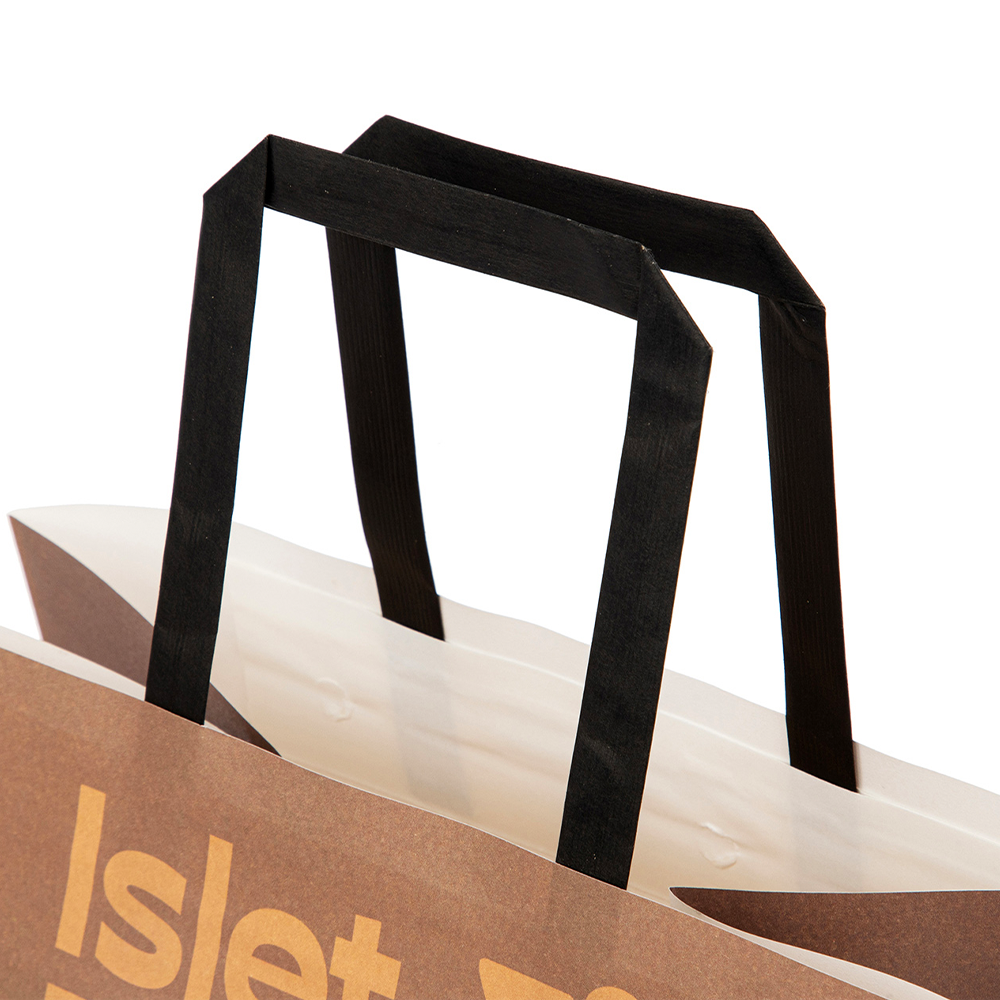
Handle Ratings often represent the true bottleneck. Twisted paper cords generally outperform flat handles under heavy loads. However, the adhesive patch holding the handle is usually the first failure point. A bag might hold 30 pounds, but the handle glue might fail at 15 pounds.
Reputable manufacturers do not guess their strength limits. They rely on standard laboratory durability protocols. The EN13590:2003 standard provides a rigorous framework. Laboratories perform systematic drop testing and impact testing. They fill samples with specified weights and drop them repeatedly. Ask your supplier if they adhere to these testing frameworks before making a massive purchase.
You now understand the technical specifications. Next, you need a reliable method to apply this knowledge. Follow this simple, actionable framework before placing your next wholesale order.
Never estimate visually. Measure the heaviest combined order size you expect a customer to carry. You must account for box weight, actual product weight, and internal packaging weight. Weigh this maximum load on a digital scale. Use this baseline number to select your minimum basis weight tier.
Moisture destroys kraft paper rapidly. Condensation from hot takeout boxes or refrigerated groceries compromises fiber integrity within minutes. If moisture is present in your operations, you must compensate. Step up one basis weight tier immediately. Alternatively, insist on 100% virgin kraft paper, which resists moisture degradation slightly better than recycled alternatives.
Think about the customer journey. Match handle strength to the carrying duration. Does the customer walk 20 feet for a curbside pickup? A standard flat handle might suffice. Do they walk multiple city blocks to a subway station? You absolutely need reinforced twisted paper cords and thicker substrate. Ergonomics heavily influence the perceived value of your brand.
Never buy bulk supplies based purely on paper specs listed on a website. Always request physical samples. Perform a physical load and drop test in your own facility. Mimic actual employee packing speeds and rough customer handling. Load it, swing it, and let it sit with condensation for twenty minutes. Real-world testing exposes flaws a spec sheet hides.
Checklist: Evaluating Physical Samples | ||
Test Element | Action Required | Failure Indicator |
|---|---|---|
Handle Adhesion | Load max weight and lift sharply 10 times. | Glue patch peels away from the inner wall. |
Bottom Gusset | Place a heavy, square box inside and carry for 5 minutes. | Seam tearing near the corners of the flat bottom. |
Moisture Resistance | Place a hot container inside for 15 minutes, then lift. | Bottom becomes visibly transparent or easily punctures. |
The true weight capacity of any packaging relies on a specific formula. It combines basis weight, paper quality, and structural design. You cannot look at just one metric. A 60# recycled bag might fail faster than a 50# virgin kraft option if the handle adhesive is poor.
To prevent procurement disasters, evaluate your heaviest realistic customer order first. Factor in moisture and transport duration. Move away from vague historical volume metrics and focus strictly on basis weight and laboratory load ratings.
For standard heavy-duty retail environments, always default to a 50# or higher basis weight. Utilize virgin kraft whenever possible for premium reliability. Ensure your handles feature reinforced adhesive patches. Finally, validate every specification through rigorous physical sampling before committing to a bulk contract.
A: No. The "pound" designation is a historical volume measurement, originally denoting how much sugar the sack could hold. A standard 6LB takeout size usually holds only 2 to 4 lbs of physical weight safely, depending entirely on the item's shape and moisture content.
A: Bottom blowouts usually occur due to sharp corners on interior boxes. Moisture degradation from hot food or cold items also weakens the glue rapidly. Additionally, incorrect gusset sizing causes uneven load distribution, forcing all the weight onto a single seam instead of the flat base.
A: Yes. The recycling process inevitably shortens the cellulose paper fibers. This significantly reduces overall tensile strength. To match the performance and tear resistance of standard virgin kraft, heavy loads generally require noticeably thicker recycled paper.
A: Typically, standard 1/6 BBL sizes are sold in bulk B2B bundles containing 400 to 500 bags. Smaller, lightweight merchandise sizes might be packed in cartons of 1,000, depending heavily on the specific manufacturer and basis weight thickness.


