

close
Choose Your Site
Global
Social Media


Views: 0 Author: Site Editor Publish Time: 2026-06-27 Origin: Site


Regulatory rules and shifting consumer demands continue to drive businesses away from single-use plastics. Companies face a complex packaging dilemma. They need reusable alternatives. Fragile paper tears easily under heavy loads. Traditional woven fabrics cost too much for high-volume giveaways. This leaves a significant gap in the market.
Spunbond polypropylene bridges this gap perfectly. It provides a highly effective middle ground for modern enterprises. A Non Woven Bag delivers substantial strength without breaking tight operational budgets. You can scale these solutions rapidly across retail and grocery operations.
This guide evaluates practical applications and material limitations. You will learn specific sourcing criteria for adopting non-woven packaging. We examine manufacturing mechanics, environmental realities, and procurement frameworks. Our objective is to help you select the exact specifications your business needs for successful implementation.
Core Function: Non woven bags are primarily used for retail packaging, grocery transport, and promotional events due to their high strength-to-weight ratio.
Cost-Efficiency: They offer a lower cost per unit than woven alternatives while maintaining sufficient durability for 50+ reuses.
Sustainability Nuance: While made from plastic (PP), their eco-value relies on reusability and recyclability (where #5 plastic facilities exist), significantly lowering carbon footprint compared to single-use plastics when reused consistently.
Sourcing Metric: Quality and use-case suitability are strictly dictated by GSM (Grams per Square Meter) and handle construction (ultrasonic vs. stitched).
Understanding material mechanics helps you make better packaging decisions. Manufacturers create non-woven fabric from spunbond polypropylene (PP). They do not weave individual threads together. Instead, factories extrude melted polymer into long filaments. Machines lay these fine filaments down in a random web pattern. Heated rollers then press the web together. This thermal bonding fuses the plastics into a solid sheet.
This unique manufacturing method generates specific physical properties. The resulting material breathes easily. It resists water naturally. The non-woven surface remains exceptionally flat and smooth. This flatness provides an ideal canvas for custom printing. Your logos and branding will appear sharp and vibrant.
However, you must consider the physical trade-offs. Non-woven materials exhibit lower tear resistance compared to woven fabrics. A sharp object can puncture the flat web more easily than interwoven threads. Despite this limitation, spunbond PP offers a massive advantage. Factories produce it significantly faster. This rapid production drastically lowers unit costs at scale. You gain affordable packaging capable of handling everyday consumer tasks.
Assess your typical product edges before selecting non-woven fabrics.
Avoid placing unboxed sharp items directly against the material.
Utilize laminated non-woven variants if you require minor puncture resistance.
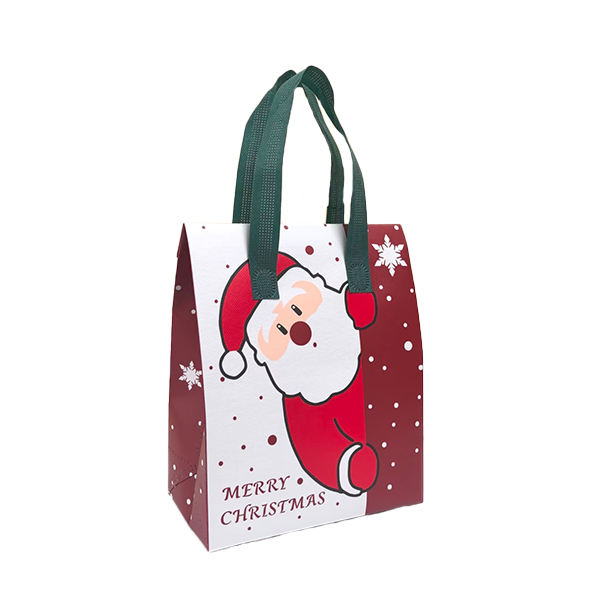
Different industries leverage this material for distinct operational benefits. The inherent flexibility of spunbond PP supports various commercial functions.
Apparel retailers frequently rely on the non woven shopping bag at checkout. Consumers perceive these carriers as premium upgrades from standard film plastics. They feel substantial and look upscale. The smooth fabric ensures high print fidelity. Brands can reproduce intricate logos flawlessly. This creates a low-cost, high-visibility mobile billboard. Customers often reuse them for personal errands. This extends your brand impression far beyond the initial purchase.
Supermarkets face strict single-use plastic bans globally. They need dependable, heavy-load transport solutions. Standard grocery totes often utilize denser 80 to 100 GSM fabrics. Shoppers demand washability. Reusable carriers risk cross-contamination from meat and produce spills. Consumers can easily wipe down or gently wash non-woven materials. They dry quickly. This washability makes them ideal for daily grocery runs.
Corporate event organizers distribute massive quantities of marketing materials. They bundle brochures, samples, and promotional items into event carriers. Non-woven options offer high visibility in crowded convention halls. They ship flat and lack bulk. You save considerably on freight costs when shipping pallets to event venues. Furthermore, attendees show a high post-event retention rate. They take them home and repurpose them.
Restaurants require stable transport for takeout containers. Traditional paper sacks often fail when condensation accumulates. Spilled soup easily destroys paper bottoms. A non-woven carrier provides a stable, flat-bottomed transport method. It prevents minor spills from seeping through immediately. Many catering businesses choose laminated non-woven models. The lamination adds thermal retention properties. Food stays warmer during transit.
Purchasing managers must decide between woven and non-woven constructions. Making the wrong choice leads to inflated budgets or product failures. You must evaluate your specific operational requirements carefully.
Choose non-woven materials when your budgets are tight. They dominate high-volume scenarios like standard retail giveaways. They perform exceptionally well for moderate loads under 10 to 15 pounds. Consumer-facing distributions generally favor the smoother finish of non-woven fabrics.
Choose woven materials when applications demand extreme durability. Industrial environments require stronger threads. You need woven fabrics for bulk agricultural feed. Heavy industrial parts will destroy non-woven webs. Sharp or puncturing contents require the interlocking strength of woven polypropylene.
Cost remains a primary deciding factor. Non-woven options generally reduce your unit cost by 20% to 40%. This reduction depends heavily on your specific customization requests. This economic advantage makes spunbond PP the global standard for everyday consumer distribution.
Feature | Non-Woven Polypropylene | Woven Polypropylene |
|---|---|---|
Manufacturing Method | Thermal bonding (pressed web) | Interlocking threads (woven) |
Surface Texture | Smooth, flat, highly printable | Textured, ridged surface |
Load Capacity | Moderate (Up to 15 lbs) | Extreme (50+ lbs) |
Relative Cost | Lower | Higher |
Sustainability marketing often blurs material realities. You must understand the true environmental footprint of your packaging. This prevents accidental greenwashing and protects your brand reputation.
We must clarify one fundamental fact. Non-woven PP is still a petrochemical product. It originates from fossil fuels. You should actively avoid labeling these items as "biodegradable." They do not break down harmlessly in natural environments. They degrade into microplastics. Transparent communication builds trust with eco-conscious consumers.
The environmental value relies entirely on repeated usage. Life cycle assessments provide stark realities. Producing heavier, durable fabric requires more energy than manufacturing thin film plastics. An individual must use a Non Woven Bag approximately 11 to 14 times. This usage offsets the initial environmental impact of a standard single-use bag. If a customer throws it away after one trip, the ecological damage increases.
End-of-life processing presents another implementation risk. Industry standards classify spunbond PP as a #5 plastic. Technically, recyclers can melt it down and repurpose it. However, many municipal curbside programs refuse them. The fabric can entangle sorting machinery. Consumers usually must drop them off at commercial recycling centers. You should consider adding disposal instructions to your printed designs. This guides consumers toward proper recycling habits.
Ordering custom packaging requires precise specifications. Vague requests lead to inconsistent product quality. You need a structured procurement framework. Focus on three critical metrics: fabric density, construction methodology, and print application.
GSM stands for Grams per Square Meter. It measures fabric density and dictates overall strength. You must align your GSM choice with your intended use case.
60 to 70 GSM: This lightweight category suits trade shows perfectly. It securely holds paper brochures, light apparel, and small promotional items. It feels thin but resists tearing better than paper.
80 GSM: Industry professionals consider this the gold standard. A standard non woven shopping bag utilizes 80 GSM fabric. It balances cost and structural integrity perfectly for daily retail use.
100 to 120+ GSM: Choose this heavy-duty tier for demanding tasks. Groceries, liquid transport, and heavy hardware require maximum density. These thicker fabrics stand upright easily during loading.
How a factory attaches the handles determines the ultimate failure point. You have two primary construction options.
Heat-sealed or ultrasonic construction utilizes high-frequency sound waves. The machine melts the handles directly onto the main body. This method eliminates thread and sewing labor. It offers cheaper, faster production. However, it provides lower weight tolerance. Ultrasonic seams remain prone to handle blowouts under high stress. Choose this for lightweight retail scenarios.
Sewn or stitched handles require traditional sewing machines. Factories stitch reinforced "X" patterns at the attachment points. This incurs higher labor costs. Production takes longer. Yet, it delivers superior durability. You absolutely need stitched construction for grocery applications and heavy load transport.
Your artwork dictates the required printing method. Silk screen printing works best for straightforward designs. It handles one or two solid colors efficiently. The ink bonds strongly to the porous PP surface. Silk screening keeps unit costs incredibly low.
Heat transfer printing becomes necessary for full-color artwork. If your logo features gradients or complex photography, you need this method. The factory prints the image onto a specialized film. They then heat-press this film onto the fabric. This process yields beautiful results but noticeably increases your unit cost. It also leaves a slightly glossy patch where the film adheres.
Specifying 60 GSM fabric for grocery loads to save money.
Choosing ultrasonic handles for carrying canned goods.
Designing full-color gradients while demanding bottom-tier silk screen pricing.
The true utility of spunbond packaging lies in its exceptional balance. It merges favorable economics with extensive customizability. It delivers acceptable durability for most consumer applications. You can replace fragile paper and harmful single-use plastics simultaneously. The material adapts to retail checkout counters just as easily as restaurant takeout stations.
Success requires careful planning before production begins. You must audit your specific load-weight requirements honestly. Evaluate your budget constraints regarding customization. Always request physical samples from manufacturers before committing to large volumes. Test these samples under real-world conditions.
Next steps for successful implementation:
Calculate the maximum weight your customers typically carry per transaction.
Select a GSM rating that provides a 20% safety margin above that maximum weight.
Determine whether stitched or ultrasonic handle construction fits your durability needs.
Finalize artwork as solid spot colors to maximize printing cost-efficiency.
A: They are inherently water-resistant, not fully waterproof. Spunbond polypropylene repels light rain and minor spills. However, continuous exposure or heavy liquid volume will eventually seep through the breathable fabric web. You can achieve full waterproofing by adding a laminated layer to the exterior.
A: Yes, you can wash them. Hand washing with mild soap and cold water works best. Avoid using washing machines on heavy-duty cycles, as aggressive agitation can degrade the thermal bonds. Never put them in a heated dryer. They will melt. Always air dry them flat.
A: MOQs depend entirely on the printing method and factory location. Domestic suppliers utilizing silk screen printing often accept orders as low as 250 to 500 units. Overseas factories manufacturing custom sizes and base colors generally require 3,000 to 5,000 units minimum.
A: A well-constructed 80 GSM model typically survives 50 to 100 standard retail trips. Lifespan relies on load weight and handle construction. Carrying lightweight clothing allows for years of use. Constantly overloading it with heavy canned goods will cause the handle attachments to fail much sooner.


