

close
Choose Your Site
Global
Social Media


Views: 0 Author: Site Editor Publish Time: 2026-03-02 Origin: Site


Packaging is no longer just protection—it is brand identity, regulatory compliance, supply chain speed, and customer experience combined. As businesses adapt to evolving retail expectations and sustainable packaging trends, the role of the Ultrasonic Non Woven Bag is shifting from a simple carrier to a strategic asset. Decision-makers are no longer asking only “What is this bag made of?” They are asking “How does this packaging align with our brand, our sustainability message, and our operational goals?” In this article, we explore where ultrasonic non-woven bags are heading and why this construction method fits the future direction of premium, efficient, and cleaner packaging solutions.
Modern packaging must communicate value instantly. At the same time, brands are under pressure to reduce material complexity and unnecessary embellishments. The future lies in refined simplicity.
Visual minimalism is becoming a strong design language. Instead of adding layers, laminations, or decorative stitching, brands are seeking structural elegance. Ultrasonic bonding produces seamless edges and smooth finishes without thread. This allows the bag itself to look refined without additional decoration.
Clean seam lines contribute to shelf impact. When displayed in boutiques, cosmetic counters, or electronics stores, a seamless non-woven bag appears intentional and polished. Customers subconsciously associate clean finishing with quality control and reliability.
As competition intensifies in retail environments, subtle structural details become differentiators. The Ultrasonic Non Woven Bag meets this demand by delivering a premium look through construction precision rather than added materials.
Packaging is increasingly integrated into brand storytelling. Consumers share unboxing moments on social media platforms, and packaging design influences that narrative. A bag that holds its shape and features smooth edges enhances presentation in photos and videos.
Future packaging strategies consider the bag as part of the product journey. Instead of being discarded immediately, it becomes reusable and visually aligned with brand identity. Ultrasonic construction supports this shift by offering structured, aesthetically clean packaging suitable for retail, gifting, and promotional campaigns.
As supply chains grow more complex, efficiency and reliability become strategic priorities. Buyers increasingly evaluate not just product quality, but production stability and lead time assurance.
Ultrasonic welding relies on controlled parameters that allow consistent seam bonding. This controlled process contributes to stable production cycles. For buyers managing large promotional events or synchronized product launches, predictable manufacturing is essential.
Shorter assembly steps and fewer consumables reduce operational variability. Campaign deadlines are non-negotiable. When packaging suppliers provide reliable timelines, brands can plan with confidence.
The future of packaging includes not only innovative design but also streamlined production processes. Ultrasonic bonding supports this direction through repeatable seam quality and efficient workflow.
International brands operate across multiple regions. Packaging appearance must remain consistent regardless of distribution location. Uniform seam lines and predictable structural design reduce variation between production batches.
As global supply chains expand, consistency becomes a requirement rather than a bonus. Ultrasonic construction contributes to standardization by minimizing manual variation in seam formation.
For decision-makers focused on brand uniformity, this consistency strengthens long-term operational alignment.
Sustainability discussions are evolving beyond materials to include manufacturing methods. Buyers now consider how products are made, not just what they are made of.
Ultrasonic welding bonds fibers through vibration and pressure rather than additional chemical adhesives. This streamlined joining approach simplifies structural composition.
As regulatory frameworks and consumer awareness continue to evolve, cleaner manufacturing narratives gain importance. A construction method that avoids unnecessary bonding agents supports forward-looking sustainability strategies.
The conversation around sustainable packaging trends increasingly includes production efficiency and material simplification. Ultrasonic technology aligns with this direction.
Compared to some heat-based sealing methods, ultrasonic bonding can operate with controlled localized energy. This may reduce widespread thermal stress on the fabric.
While technical details remain within manufacturing expertise, the practical implication is stable seam formation without compromising overall fabric integrity. Future packaging solutions prioritize precision over excess energy usage.
Brands seeking reliable and controlled production processes may find ultrasonic construction aligned with these expectations.
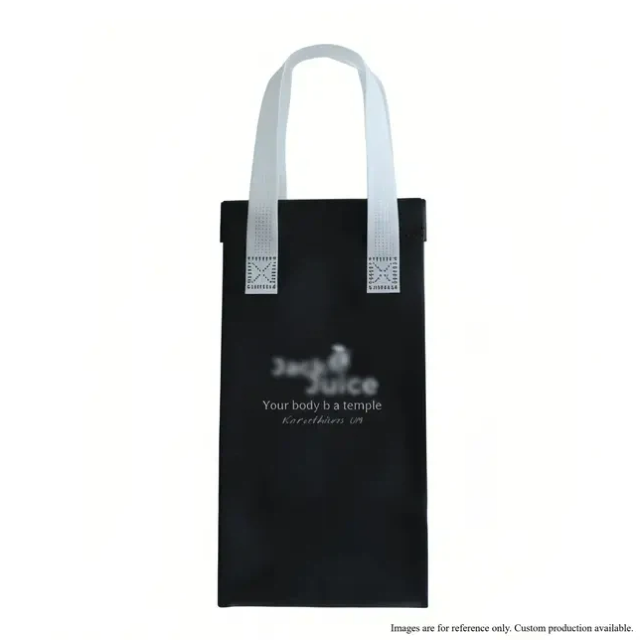
Customization continues to shape the packaging industry. Brands aim to stand out in saturated markets without increasing complexity or cost.
Ultrasonic bonding supports precise seam lines and structured geometry. Defined bottom gussets, reinforced edges, and tailored silhouettes are achievable through controlled bonding patterns.
As consumer attention spans shorten, visual differentiation becomes critical. Structured shapes and crisp edges allow brands to experiment with modern forms without sacrificing durability.
Bicheng Packing Bags offers customizable sizes, printing, and structural adjustments. By integrating ultrasonic welding into production, the company supports innovative packaging concepts that balance design and function.
Limited edition releases and corporate events increasingly demand distinctive packaging. Short-term campaigns require memorable presentation.
Ultrasonic non-woven bags can incorporate customized printing and structured elements that reflect event themes or seasonal branding. Precision bonding ensures that even personalized designs maintain consistent quality.
Future packaging will continue to merge branding with functionality. Customization without compromising production efficiency is key.
As markets mature, vague claims lose effectiveness. Buyers demand measurable performance and transparent specifications.
Seam strength and fabric durability will increasingly require defined metrics. Rather than relying on generic claims, future packaging discussions will involve clear load expectations and usage cycles.
Ultrasonic welded seam strength can be optimized when fabric weight, bonding width, and reinforcement design are carefully specified. Brands that provide data-backed specifications gain credibility.
In the coming years, informed buyers will expect sample validation and practical testing. This shift favors suppliers who understand both engineering principles and branding needs.
Sustainability messaging must be accurate and verifiable. Claims about reusability or recyclability should align with real performance and material composition.
Non-woven bags, when designed for durability, encourage repeated use. Future packaging strategies will emphasize lifespan rather than single-use convenience.
By focusing on recyclable materials and responsible production, Bicheng Packing Bags aligns with this evolving expectation.
Buyer Expectation | What It Means for Packaging Bags | How Ultrasonic Non-Woven Fits |
Premium appearance | Cleaner finishing and structured design | Seamless edges and refined visual presentation |
Faster turnaround | Stable and efficient production processes | Repeatable bonding and consistent output |
Clear sustainability narrative | Reusable design and simplified joining | Bonding without extra adhesives |
Evidence-based durability | Defined load tests and seam specifications | Design-driven seam optimization |
This table illustrates how ultrasonic construction aligns with emerging packaging requirements.
The packaging industry is shifting toward integration of design, efficiency, and sustainability. Brands that treat packaging as part of their value proposition will prioritize structural precision and consistent performance.
Ultrasonic construction fits within this trajectory because it addresses multiple strategic goals simultaneously:
Elevated brand perception
Reliable production timelines
Clean manufacturing narrative
Adaptable customization
Rather than adding complexity, it simplifies construction while enhancing presentation.
For procurement teams, the future involves selecting partners capable of combining technological control with design flexibility. For marketing teams, it involves ensuring that packaging reinforces brand identity. For operations managers, it involves minimizing risk through stable production methods.
The Ultrasonic Non Woven Bag represents a convergence of these priorities.
Future winners in packaging will combine premium appearance, operational efficiency, and credible specifications. The shift toward sustainable packaging trends is not only about materials but about process clarity and structural refinement. A well-designed ultrasonic welded non woven bag reflects this direction by delivering clean aesthetics, efficient production, and adaptable customization. To explore how ultrasonic construction can support your retail, cosmetic, electronics, or promotional packaging goals, contact Bicheng Packing Bags and discuss your next project with our team.
Because it combines clean seam aesthetics, efficient production control, and alignment with sustainability-focused manufacturing narratives.
Seamless edges and structured shapes enhance visual impact, allowing brands to present a refined and modern packaging style.
Yes. Their reusable nature and streamlined joining process support responsible packaging strategies when properly specified.
Yes. Clear load specifications, sample validation, and transparent material information are becoming standard expectations in packaging discussions.


