

close
Choose Your Site
Global
Social Media


Views: 0 Author: Site Editor Publish Time: 2026-03-31 Origin: Site


As global regulations tighten around plastic usage and consumers increasingly prioritize sustainability, businesses are actively shifting toward eco-friendly packaging solutions. Governments across Europe, North America, and many emerging markets are implementing policies to reduce single-use plastics, which has accelerated the adoption of reusable alternatives.
Among the most popular solutions, the Stitched Non Woven Bag has become a preferred choice due to its durability, cost-efficiency, and adaptability across industries. It is not only a packaging tool but also a long-term branding asset that aligns with environmental goals.
At the same time, heat-sealed non woven bags are also widely used, especially in applications where lightweight packaging and fast production are required. This creates a common dilemma for buyers: choosing between structural strength and streamlined production.
This guide provides a detailed comparison between stitched non woven bags and heat-sealed bags, focusing on structure, durability, customization, and application suitability. It also considers practical business factors such as usage frequency, branding impact, and sustainability alignment. By the end, you will have a comprehensive understanding of which option best supports your packaging strategy.
A Stitched Non Woven Bag is a reusable bag made from polypropylene (PP) non woven fabric, assembled through a sewing process that reinforces its seams and overall structure. This construction method distinguishes it from other types of non woven bags and directly contributes to its strength and longevity.
Unlike thermally bonded bags, stitched bags are constructed through a multi-step production process:
Cutting non woven fabric into precise panels based on design specifications
Aligning and stitching the panels using industrial sewing machines
Reinforcing stress points such as handles and bottom edges
Adding finishing touches like trimming and quality inspection
This method ensures structural integrity and allows for more complex designs, including gussets and reinforced handles.
Reinforced stitched seams that enhance load-bearing capacity
Thick fabric options (typically 70–120 GSM) for improved durability
Box-shaped or gusseted bottom to maximize storage space
Handles securely stitched into the bag body for added strength
These features make stitched bags suitable for repeated use in demanding environments.
Made from recyclable polypropylene fibers
Breathable structure that prevents moisture buildup
Resistant to tearing and stretching
Lightweight while maintaining high strength
These material properties contribute to both functionality and environmental benefits.
Supermarkets and grocery stores
Retail shopping environments
Trade shows and promotional events
Corporate branding and marketing campaigns
The Stitched Non Woven Bag is especially effective in situations where durability and brand exposure are equally important.
Heat-sealed non woven bags are produced using thermal bonding technology, where layers of fabric are fused together using heat and pressure instead of stitching. This method allows for faster production and a more uniform appearance.
Fabric edges are aligned and pressed under heat
Ultrasonic or thermal sealing machines bond the material
Edges are fused without the use of thread
Minimal manual intervention is required
This process enables high-speed manufacturing, making it suitable for large-scale production runs.
Smooth and seamless edges
Lightweight construction for easy handling
Flexible structure suitable for simple designs
Consistent finish across large quantities
Lightweight packaging solutions
High-volume promotional distributions
Temporary or short-term usage scenarios
Heat-sealed bags are typically chosen when efficiency and uniformity are priorities.
Understanding the distinctions between these two types is essential for making informed procurement decisions, especially for businesses balancing cost, durability, and branding.
Feature | Stitched Non Woven Bag | Heat-Sealed Non Woven Bag |
Manufacturing Method | Sewing with reinforced stitching | Thermal or ultrasonic sealing |
Structural Strength | High, reinforced seams | Moderate, bonded edges |
Load Capacity | Suitable for heavy items | Best for lightweight contents |
Reusability | Long-term, multiple uses | Short to medium-term use |
Fabric Thickness | Typically thicker (70–120 GSM) | Usually thinner (40–80 GSM) |
Appearance | Structured and durable finish | Smooth and minimalistic look |
Customization Capability | High (printing, sizing, handles) | Moderate |
Application Scope | Retail, grocery, branding | Lightweight packaging, promotions |
The construction method directly impacts the bag’s performance. A Stitched Non Woven Bag uses sewing techniques that create flexible yet strong joints between fabric panels. This allows the bag to adapt to weight distribution without compromising integrity. Heat-sealed bags, while efficient to produce, rely on bonding, which creates uniform edges but limits reinforcement at stress points.
Stitched non woven bags are designed for heavier loads due to their reinforced seams. The stitching distributes weight evenly across the structure, reducing strain on individual نقاط of the bag. This makes them highly suitable for carrying groceries, packaged goods, and bulk items.
While heat-sealed bags offer a clean and minimal look, stitched bags provide a more structured and premium appearance. This makes them more effective for branding purposes, especially when high-quality printing and long-term use are required.
The Stitched Non Woven Bag is engineered for repeated use. Its durability ensures that it retains its shape and strength over time, even under frequent handling. This extended lifespan enhances both functional value and environmental impact.
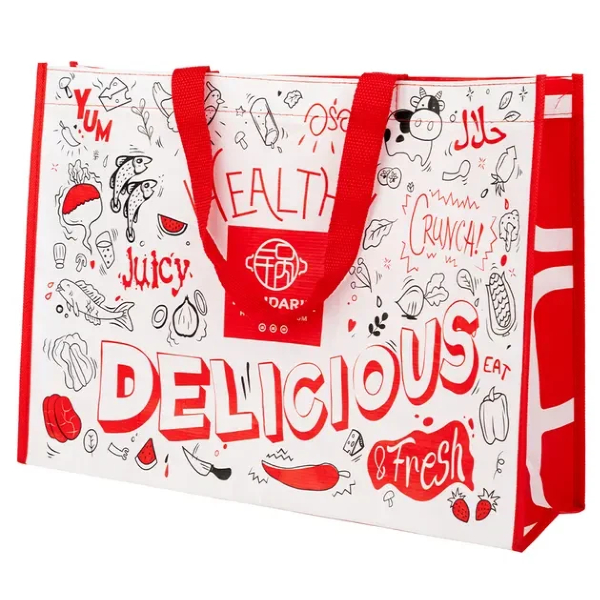
For businesses seeking a balance between performance and brand visibility, stitched non woven bags present a highly practical solution.
The reinforced stitching significantly improves resistance to wear and tear. This makes the bag reliable for daily use in retail and commercial environments.
Because these bags are reused multiple times, they serve as mobile advertisements. Every use increases brand impressions without additional marketing cost.
Stitched bags can be adapted for various sectors, including retail, food distribution, and corporate events. Their structural strength allows them to handle diverse product types.
Businesses can customize:
Dimensions to fit specific products
Fabric thickness for different load requirements
Printing styles to match brand identity
Handle designs for user convenience
This flexibility makes stitched bags suitable for both functional and promotional purposes.
Grocery and supermarket shopping
Retail environments with heavier merchandise
Trade shows and exhibitions
Long-term promotional campaigns
These scenarios benefit from durability and repeated usage.
Lightweight packaging
Large-scale distribution campaigns
Situations requiring fast production
These applications prioritize efficiency and simplicity.
Customization plays a crucial role in enhancing both functionality and brand recognition.
Custom dimensions tailored to product requirements
Gusseted designs for increased storage capacity
Reinforced bottoms for stability
Silk screen printing for simple designs
Heat transfer printing for detailed graphics
Lamination for enhanced visual appeal
Reinforced loop handles for heavy loads
Die-cut handles for compact designs
Extended handles for shoulder carrying
Wide spectrum of color choices
Full-surface printing for maximum visibility
Consistent color matching for brand identity
Choosing between stitched and heat-sealed bags requires evaluating several operational factors.
Heavier products require stronger support, making the Stitched Non Woven Bag the more suitable option.
For applications involving repeated use, durability becomes essential. Stitched bags provide consistent performance over time.
If packaging is part of your marketing strategy, stitched bags offer better long-term exposure due to their extended lifespan.
Reusable bags contribute more effectively to reducing waste and supporting environmentally responsible practices.
Both stitched and heat-sealed non woven bags play valuable roles in modern packaging. However, when we focus on durability, reusability, and long-term brand presentation, the Stitched Non Woven Bag stands out as a stronger and more practical choice. Its reinforced stitching, reliable structure, and flexible customization options make it especially suitable for retail packaging, grocery use, promotional activities, and branded shopping solutions.
For businesses seeking packaging that combines functionality with marketing value, choosing the right manufacturer is just as important as choosing the right bag type. This is where Zhejiang Bicheng New Material Co., Ltd. can offer meaningful support. As a professional packaging bag manufacturer, the company provides a wide range of non woven bag solutions with customization services tailored to different business needs, including size, color, printing, and structure.
When we aim to improve packaging quality while also strengthening brand visibility, working with an experienced supplier can make the process more efficient and dependable. For those who want to explore more about Stitched Non Woven Bag options, product details, or custom packaging solutions, we can consider learning more about Zhejiang Bicheng New Material Co., Ltd. and contacting the company directly for further information.
A stitched non woven bag is widely used in retail, grocery, and promotional settings due to its strength, reusability, and ability to carry heavier items.
Yes, they offer extensive customization options, including size, color, printing, and handle design, making them ideal for branding.
They are specifically designed for repeated use, which enhances their practicality and environmental value.
Their durability ensures long-term usage, increasing brand exposure and reinforcing customer recognition over time.


